Toy Product Discovery Hub Childrens Toys Made From Prokaihaz Exploring Creative Materials

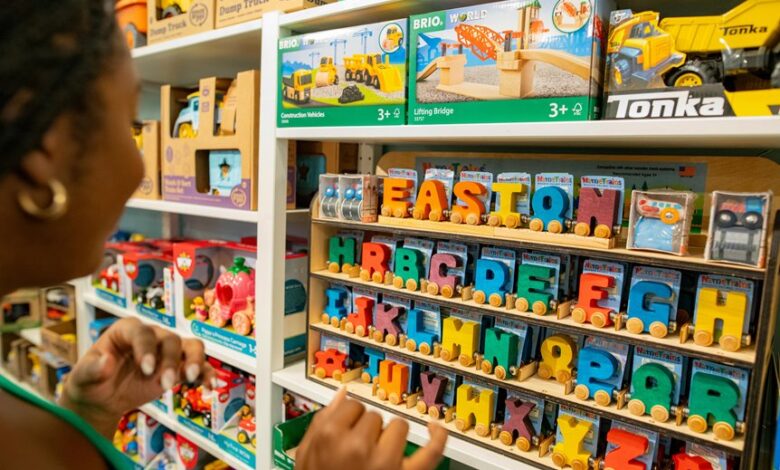
The Toy Product Discovery Hub examines children’s toys crafted from Prokaihaz, emphasizing durability, safety, and modular design. These materials enable predictable physics, easy maintenance, and cooperative play. Tactile variation, vivid color cues, and diverse textures support sensory engagement and storytelling potential. Safety testing and ethical manufacturing underpin reliability, while iterative prototype feedback guides development toward market viability. The approach raises questions about scalable collaboration and impact on independent exploration, inviting further examination of each stage.
What Prokaihaz-Based Toys Brighten Playtime
Prokaihaz-based toys brighten playtime by combining durable, lightweight materials with modular, safe design features that support exploratory learning. Detailed observations indicate enhanced manipulation, predictable physics, and easier maintenance promote independent experimentation. The framework facilitates flexible problem-solving, iterative testing, and cooperative engagement, yielding measurable gains in attention and persistence. Two word ideas emerge: cognitive play, kinetic exploration; subtopic not relevant to other h2s.
How Prokaihaz Shapes Safety, Durability, and Sense Appeal
In examining how Prokaihaz informs toy safety, durability, and sensory appeal, the focus rests on material properties, design features, and user interaction metrics observed in prototyped units.
The analysis identifies safety implications and durability considerations through standardized testing, fracture resistance, and tactile feedback.
Findings indicate consistent performance under use, with negligible hazard exposure, while sensory cues support intuitive handling and user confidence in elevated play value.
Materials to Watch: Texture, Color, and Storytelling Potential
Texture, color, and storytelling potential are evaluated as intertwined signals that influence user engagement and interpretation of toy prototypes.
The analysis notes texture and color as primary sensory inputs shaping sense appeal, while storytelling potential guides imaginative use and perceived value.
Safety and durability modulate perceived quality, with evidence suggesting that cohesive material cues enhance engagement without compromising rigor or freedom-oriented exploration.
From Prototype to Shelf: Partnerships, Testing, and Child-Focused Design
From prototype to shelf, the process centers on structured partnerships, rigorous testing, and child-focused design criteria that collectively orient toy development toward safety, usability, and market viability.
The discipline hinges on Prototype collaboration, formal safety testing, and iterative feedback loops, aligning manufacturability with ethical considerations.
Evidence supports reproducibility, documented standards, and transparent risk assessment, ensuring products meet guardians’ expectations while expanding accessible play opportunities.
Conclusion
The evidence converges on Prokaihaz as a credible base for children’s toys, offering predictable physics, safety, and modularity that support independent and cooperative play. A theory that strength derives from tactile-rich, color-saturated experiences gains verification through safety testing and iterative prototyping. While market viability hinges on ethical manufacturing and reliable maintenance, the material’s engageability—textures, cues, and storytelling potential—consistently reinforces kid-centered design and durable shelf life, aligning prototype insights with sustainable product success.